The technology is ready. Your AI strategy isn't.

One-to-one consultancy for business leaders navigating AI adoption — from first use case to full-scale agents.

Book a call
Worked with
RebelDot UK Dept. for Education ClimateKIC Makuma Univ. of Birmingham

Clear thinking starts with the right conversation.

You've used ChatGPT. Maybe your team is experimenting with a few tools that integrate AI. Your board is asking what you're doing about it. Vendors are pitching agents that promise to automate everything from customer service to procurement.

But when you sit down to plan — which use case to back first, which vendor to trust, when to move from tools to agents, how to roll something out without breaking what works, how to talk to your team about what this means for them — the picture goes blurry.

Engineers who know AI rarely understand your business well enough to know what won't work.
Business consultants don't know the technology well enough to spot the pitfalls.

Most advice on offer is either too theoretical or trying to sell you something.

You need to talk it through with someone who genuinely understands both — the technology's capabilities and limits, and the realities of leading an organisation through change.

Wherever you are on the AI adoption journey

I find that most organisations move through three stages to AI adoption.

Accelerate

People across your organisation are familiar with LLMs. They've moved on from using them like a Google search and are using them throughout the day — gathering insights from customer feedback, drafting genuinely helpful replies to support queries, producing marketing content that echoes your brand's voice.

The shift from Accelerate to Augment

This shift requires a change in how success is measured. As long as people are rewarded for volume, they'll produce volume. The leadership work is redesigning incentives around customer outcomes, not output — and giving teams permission to slow down and use AI to raise the bar rather than lower the cost.

Augment

Seeing the risks of drowning in AI slop, your teams have shifted their focus to how LLMs can improve quality and the customer experience. They're seeing opportunities to offer 'concierge' service that was never previously viable at this price point, resolve issues before the customer even notices, and mine opportunities from your data in ways that previously would have needed a data scientist. Quality, not quantity.

The shift from Augment to Act

This is where most adoption efforts stall. It's the point where AI agents start taking on whole tasks, not just assisting with them — and it requires designing new roles around the people who'll oversee them, redrawing accountability, and answering hard questions about what humans do now — which means engaging with the fear that the answer is 'nothing.' The leadership work is helping people see this as a promotion: from frontline practitioner to expert overseer of a system that does at scale what they once did by hand.

Act

Having built trust in the technology and the skills to direct it, your people gradually transition from being hands-on to supervising teams of AI agents. Curating context, judging output, and keeping a watchful eye becomes second nature, and they embrace the opportunity to leave behind the monotony of the routine for more dynamic and complex challenges.

The pattern

At every stage, this is more a human challenge than a technical one. The technology threatens to take work that people have built their careers and identities around, and reshape them into supervisors of machines.

Help your colleagues see that as career progression — moving from the frontline to a role that draws on their tacit knowledge and expert judgement — and you'll unlock a competitive advantage other organisations don't reach.

Why me

23 years of AI experience
2004–08 Gained a solid technical foundation by studying BSc Artificial Intelligence & Computer Science at the University of Birmingham.
2004–10 Research Associate on the €4.2m EU CASAM machine learning project, with two peer-reviewed publications in AI and human-computer interaction.
2024–25 Led AI deployments for multinational clients in industrial retail, advertising and insurance as AI Product Manager at RebelDot, working directly with business leaders, AI engineering teams and users.
Knows how to lead organisations through change
2016–now Founded and led Makuma, an AI-native social game — coaching the team in adopting AI tools to automate core business processes, and making the call on AI investment with my own money.
2017–19 Implemented a major bespoke software system at the UK Department of Education, managing complex requirements and organisational change.
1999–now Successfully managed complex software projects involving government departments, multinational corporations and startups.
Starts with people, not technology
2013–now Twelve years running verkla, my own service design practice, working directly with client teams to understand their customers and stakeholders.
2012–13 Designed and delivered professional Systems Thinking training to senior professionals for the EU's ClimateKIC climate innovation programme.
2024–25 Helped leadership teams at multiple organisations understand AI opportunities and risks through hands-on product management and stakeholder consultation.

I don't offer a standard playbook. I work with your specific situation: where AI actually fits, the change effort it demands, and how to lead a team that increasingly includes AI as a working colleague.

See full CV →
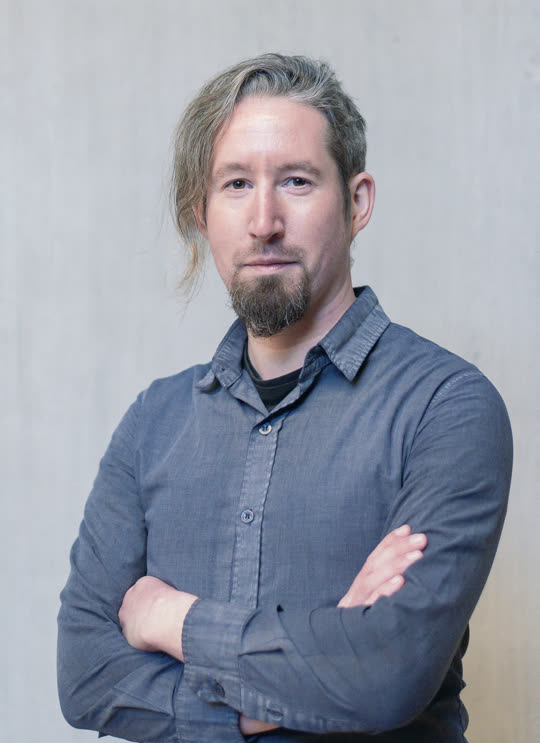
Is this the right conversation?

Who this is for
  • Senior leaders at small and mid-sized organisations
  • Middle managers at larger organisations, in cultures that are open to change
  • Non-technical, or technical but not AI-specialist
  • Already past basic ChatGPT use — exploring how AI agents could work across your organisation
  • Wanting direction and a clearer mental model, not a vendor pitch
Who this isn't for
  • Heavily political or slow-moving large organisations — honestly, I'm unlikely to be much help
  • AI engineers looking for technical depth on model architecture — this is about capabilities, not technical details
  • Anyone whose main need is help with prompting — that's individual tool training, this is about adoption across an organisation

Most senior leaders I speak to don't need more information about AI. What helps is thinking it through with someone whose only stake is in your situation — not in selling you a tool, a platform, or a transformation.

If that sounds like the conversation you need, here's how it works.

A simple, structured engagement.

  1. Pick a slot
    From the calendar below.
  2. Pay €150
    Pay online by card and let me know your invoicing details.
  3. Brief me
    Send me a short note about what you want to discuss — no preparation needed beyond a few sentences.
  4. We meet by video
    Sessions are typically 90 minutes — longer can be arranged on request.
  5. Follow-up
    I send a short written follow-up summarising the main points and any next steps.
My
guarantee

If at the end of the call you don't feel it was worth the fee, tell me and I'll refund it. The honest feedback is more useful to me than the €150.

Let's talk.

Book your call

Initial Discovery (30 mins): Free
Consultancy Session (90 mins): €150